150 Years of Reformed Instruction: What "Being Reformed" Means at Calvin Theological Seminary
A Snapshot of Reformed Identity: Calvin Seminary Faculty Reflect on a New Edited Volume
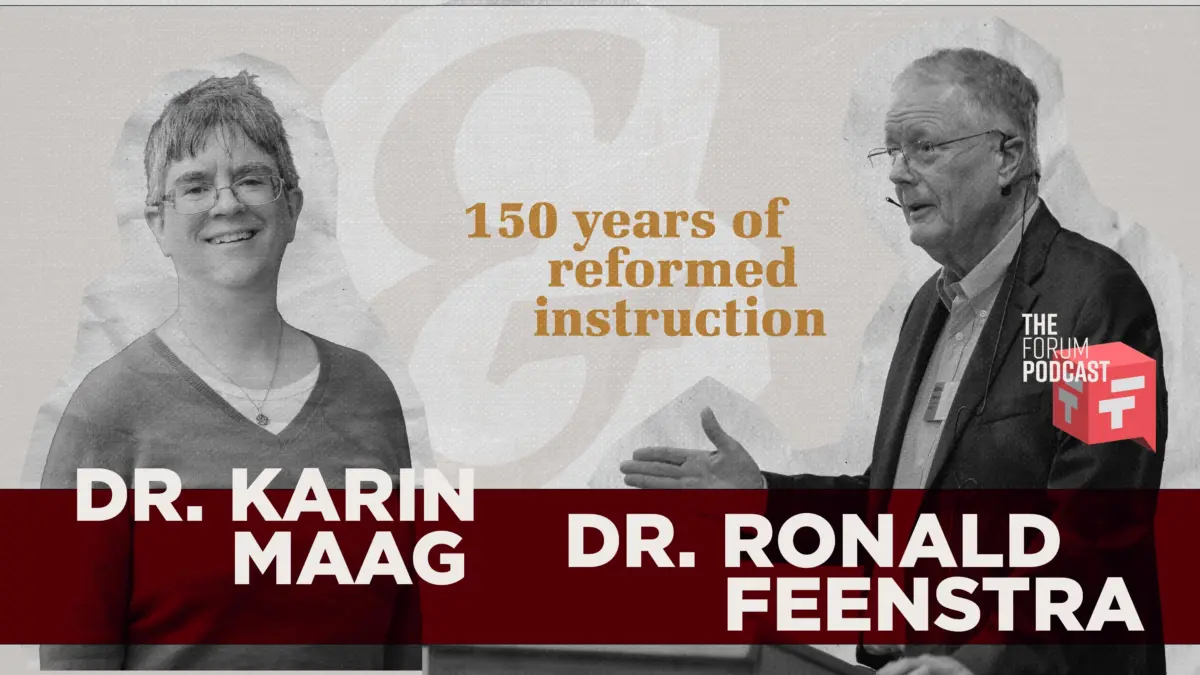
In this episode of the Forum Podcast, Phillip Palacios, Director of Communications, sits down with Dr. Karin Maag, Director of the Meeter Center for Calvin Studies and Adjunct Professor of the History of Christianity, and Dr. Ronald Feenstra, Professor of Systematic Theology, for a thoughtful conversation about a new edited volume they have co-edited together, available HERE.
At the center of the discussion is a deceptively simple question: what does Calvin Theological Seminary mean when it says it is Reformed? What began as a faculty conversation about that question eventually became a book project, one designed not only to help articulate the seminary’s identity more clearly, but also to open a window into the classrooms, commitments, and convictions of the faculty.
A Project That Began with Conversation
One of the most compelling parts of the episode is the way Maag and Feenstra describe the book’s origins. The project did not begin as a publishing plan. It began as a series of internal conversations among faculty members who wanted to better understand and express what “Reformed” means in the context of Calvin Seminary.
Those conversations became workshops, shared meals, writing sessions, and collaborative reflection across disciplines. Over time, a core group of faculty contributors emerged, and the project took shape as a collection of essays. What makes that process especially meaningful is that the book itself is the fruit of genuine institutional reflection rather than a simple branding exercise.
Opening a Window into the Classroom
A major theme in the conversation is how much faculty members learned from one another through this process. Maag notes that even within a seminary, professors do not always know what their colleagues are emphasizing in their classes or how they are framing their work theologically.
This project changed that. It gave faculty members the opportunity to see more clearly into one another’s teaching and to reflect together on the kind of formation they are offering students. That not only strengthened collegial understanding, but also supported a more coherent educational vision for students moving across courses and disciplines.
In that sense, the book is not just about defining identity. It is also about strengthening the shared work of theological education.
What Does “Reformed” Mean?
When Palacios asks the central question directly, both editors respond with nuance and clarity. Feenstra emphasizes that Reformed theology is, in many ways, basic Christianity. Like John Calvin himself, the Reformed tradition understands itself not as a departure from the Christian faith, but as a faithful articulation of it.
At the same time, Reformed theology has its own emphases. In the conversation, those emphases include the sovereignty of God, the depth of human sin, the covenantal nature of God’s relationship with his people, the role of confessional documents, and a big-picture understanding of God’s redemptive work in all creation.
These are not presented as isolated doctrines, but as framing themes that shape the seminary’s life and teaching. The result is a portrait of Reformed identity that is deeply rooted, but not narrow.
A Broad and Generous Reformed Vision
One of the most encouraging aspects of the conversation is the way both Maag and Feenstra speak about breadth. This is not a vision of Reformed theology that is defensive or closed off. Instead, they describe a faculty deeply committed to the Reformed tradition while also remaining open to learning from others and engaging thoughtfully with perspectives beyond their own.
That posture matters. It suggests that theological conviction and intellectual generosity do not have to be opposed to one another. In fact, they may strengthen one another. A seminary can be deeply rooted in confessional identity while also participating in wider Christian and academic conversations with humility and seriousness.
A Meaningful Volume for the Seminary’s 150th Year
This conversation also comes at an important moment in Calvin Seminary’s life as it enters its 150th year. Maag and Feenstra are careful not to present the book as a final statement that settles everything once and for all. Instead, they describe it more as a snapshot.
That image is especially helpful. A snapshot captures something real and meaningful, but it also belongs to a larger story. This volume represents where the seminary’s faculty sees itself at this moment in time. It offers clarity without pretending to be the last word.
That makes it particularly fitting for an anniversary season. It gives alumni, students, churches, and supporters a chance to see more clearly what Calvin Seminary values and how its faculty understand their shared mission.
Why This Book Matters
By the end of the episode, it becomes clear that this project is about more than a definition. It is about vocation, formation, and faithfulness. The essays in the volume reflect faculty members working in different disciplines and with different areas of specialization, yet united by a profound commitment to the spiritual wellbeing of students and the furthering of the kingdom of God.
That shared commitment may be the most compelling takeaway of all. The book offers readers not only a theological framework, but also a glimpse of a faculty seeking to teach with conviction, coherence, and care.
For prospective students, church members, alumni, and anyone interested in Reformed theological education, this conversation offers a meaningful introduction to Calvin Seminary’s identity and the vision that continues to shape its work.
