A Gospel Shaped Life Found in the Creeds
As Calvin Theological Seminary celebrates its 150th anniversary, we are reflecting on how historic Christian faith continues to shape the church’s mission today. In this conversation, Cory Willson explores how the Nicene Creed, Reformed theology, and a lived faith call the church into a “dialogue of love” with the world.
We Believe—and We Are Sent
Creeds, Mission, and the Church Today
What does it mean to confess “We believe” in a complex, global, and divided world?
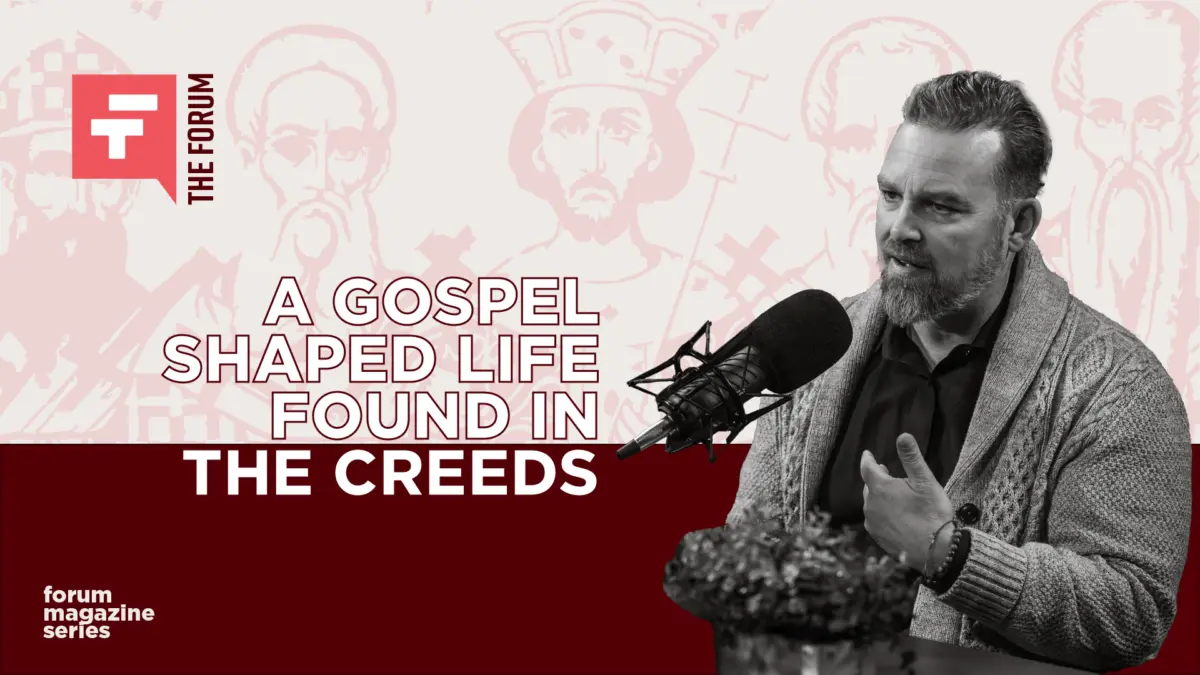
In this conversation, Cory Willson, Professor of Missiology, World Christianity, and Public Theology, joins Phillip Palacios, Director of Communications, to reflect on the relationship between Christian confession and Christian mission. Recorded as part of Calvin Theological Seminary’s 150th anniversary, the discussion explores how ancient creeds—especially the Nicene Creed—continue to shape faithful witness, theological formation, and everyday discipleship.
“Just because we have doctrinal correctness doesn’t mean we’re living a life shaped by Christ.”
— Cory Willson
Creed and Mission: Theology with Real Consequences
Drawing on the history of the early church, Cory explains that the Nicene Creed did not emerge from abstract theological debate, but from the church’s effort to remain faithful to the gospel in a particular cultural context. Faced with competing stories about reality, humanity, and salvation, the early church articulated its beliefs in order to anchor Christian identity and practice in the story of Jesus Christ.
Far from allowing doctrine to “float above life,” the creed insists that what the church believes shapes how the church lives. Questions about Christ’s divinity and humanity were not merely intellectual, hey had real consequences for how Christians understood creation, the body, salvation, and human flourishing.
“The creeds are biblical answers to real questions the church was facing as it tried to live faithfully in the world.”
Listen to the Conversation
In this episode of The Forum Podcast, Cory expands on how mission gives rise to theology—and how theology, in turn, shapes the church’s witness. He reflects on the dangers of “dead orthodoxy,” where doctrinal precision exists without the fruit of the Spirit, as well as the opposite temptation toward combative or defensive faith.
Instead, Cory describes a missional posture rooted in the Reformed tradition: one that is deeply anchored in Scripture and the creeds, yet open to learning, discerning, and engaging culture with humility and courage.
A Missionary Posture for a Global Church
Throughout the conversation, Cory emphasizes what he calls a “dialogue of love,” a way of engaging culture that neither withdraws nor assimilates, but listens carefully while bearing faithful witness to Christ. Drawing on thinkers like Abraham Kuyper and Herman Bavinck, he highlights a Reformed approach that seeks truth, goodness, and beauty wherever they appear, without surrendering the uniqueness of the gospel.
This posture is especially important in a global church. With students from more than 30 countries and multiple denominational backgrounds, Calvin Seminary is uniquely positioned to form leaders who can discern how the gospel speaks within diverse cultural contexts, whether shaped by guilt and innocence, honor and shame, or fear and power.
“Missionaries don’t have the luxury of an ‘us versus them’ mentality. Faithfulness requires a dialogue of love.”
Formation for Faithful Witness Today
Cory also reflects on what this looks like in practice at Calvin Seminary. Theological education, he argues, exists to serve the church and equip the priesthood of all believers. Pastors are not only leaders, but servants who help form disciples for faithful presence in every sphere of life—work, family, community, and culture.
This vision shapes how theology is taught at Calvin Seminary: not as detached theory, but as actionable wisdom for discipleship and mission. Students are formed not only to know the tradition, but to live it, bearing witness through lives shaped by hope, humility, and love.
“The best way to preserve a living tradition is to put it to use.”
Looking Forward at 150 Years—and Beyond
As Calvin Theological Seminary reflects on its first 150 years, this conversation points toward the future. Faithfulness, Cory suggests, is not found in retreat or defensiveness, but in lived theology, where ancient confession becomes present witness.
The Nicene Creed and the Reformed tradition continue to offer the church a shared center, not as relics of the past, but as resources for faithful engagement today. Rooted in Scripture and open to the Spirit’s work in the world, Calvin Seminary remains committed to forming leaders who confess “We believe”—and live accordingly.

