Stop Pretending to Be God: The Freedom of Vulnerable Leadership | Mandy Smith
Dr. Mandy Smith on Vulnerable Leadership, Human Limitation, and Ministry
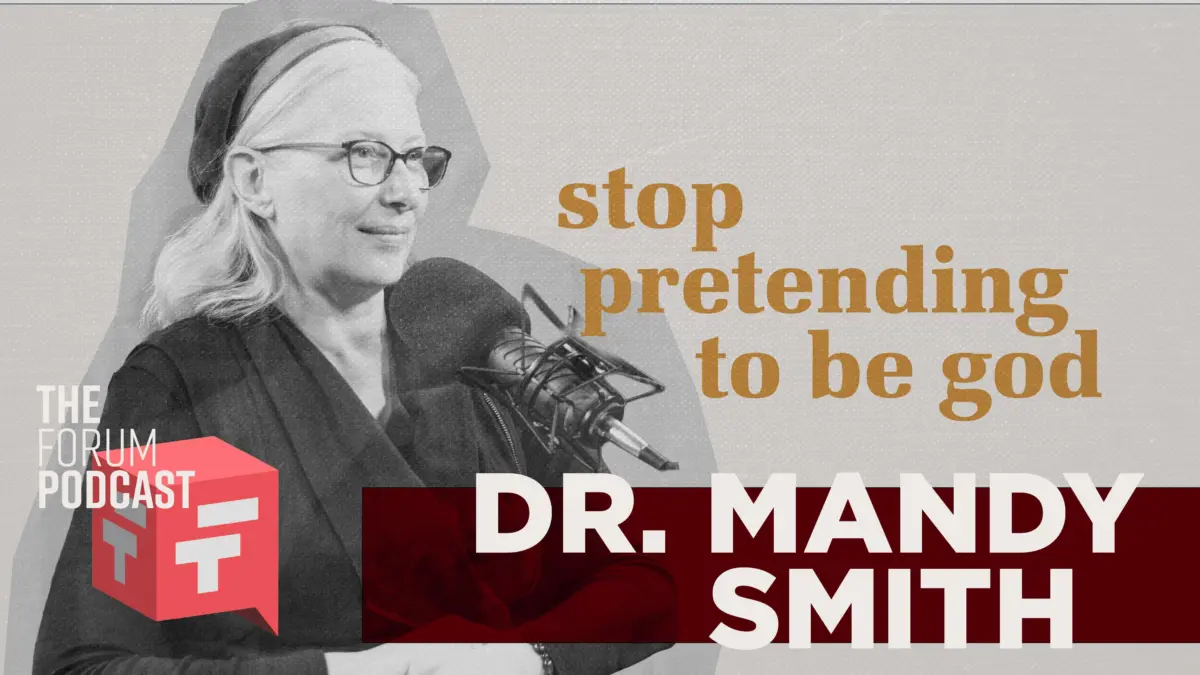
In this episode of the Forum Podcast, Calvin Theological Seminary President Jul Medenblik sits down with author and pastor Dr. Mandy Smith for a rich conversation about leadership, weakness, and the surprising freedom that comes from embracing our human limitations in ministry.
Drawing from her book The Vulnerable Pastor: How Human Limitations Empower Our Ministry, Smith reflects on a painful turning point in her own leadership journey and the ways God used it to reshape her understanding of what faithful ministry really is. What emerges is not a call to carelessness or oversharing, but a deeply biblical vision of leadership marked by dependence on God rather than the illusion of self-sufficiency.
When Leadership Expectations Become a Crisis
One of the most powerful moments in the episode comes as Smith recounts attending a large Christian leadership conference just as she was stepping into a lead pastor role. Instead of feeling encouraged, she felt crushed. The polished confidence and certainty around her made her feel deeply out of place, and the experience drove her into a profound crisis of calling and identity.
In the privacy of her hotel room, she found herself confronting the possibility that maybe she was simply not made for leadership. Yet in that moment of collapse, a different word began to emerge: “In your weakness, I’m strong.” Over time, that promise became more than a slogan. It became a new framework for understanding leadership, not as the denial of weakness, but as the place where God chooses to work.
The Difference Between Being Vulnerable and Being Human
A particularly helpful part of the conversation is Smith’s distinction between vulnerability as selective disclosure and the deeper vulnerability of simply being human. She explains that the title The Vulnerable Pastor was not even her first choice; she would have preferred something closer to “the human leader.” That is because her concern is not mainly about how much leaders should share, but about whether they are willing to live honestly within their limits.
For Smith, ministry constantly confronts pastors with realities they cannot control, fix, or foresee. That can become a place of shame, or it can become a place of freedom. Faithful leadership begins when pastors stop trying to be God for other people and instead model what it looks like to need God themselves.
Strength, Competence, and Dependence on God
Smith is careful to say that vulnerability is not an excuse for laziness or incompetence. Christian leaders are still called to work hard, develop their gifts, and serve with excellence. But competence is not the same thing as self-sufficiency. The deeper question is where leadership begins.
In the episode, she contrasts a worldly pattern of endless response and productivity with a more faithful rhythm of rest, prayer, receiving from God, and then acting out of what God gives. That does not eliminate effort, but it changes its foundation. Ministry becomes less about proving oneself and more about participating in God’s work.
Good and Bad Sharing
The conversation also offers practical wisdom on one of the most difficult questions around vulnerability: what should leaders actually share, and with whom?
Smith emphasizes that pastors do not need to tell everyone everything. There is both good and bad sharing, just as there is good and bad withholding. Discernment matters. Some people are in places where they need care and stability from their leaders, while others are mature enough to bear more of a leader’s honest struggle and even offer support in return.
Her examples make the point concrete. A colleague, a mature elder, and a college student may each receive a different version of the truth depending on what is wise, loving, and appropriate. Vulnerable leadership is not reckless transparency. It is truthful, discerning, and relationally aware.
Resisting Idolatry in Ministry
Another central theme of the episode is the danger of pastoral idolatry. Smith notes that many ministry systems quietly train leaders to become the experts, the strong ones, the “spark plugs” who keep everything going. That role can feel flattering, but it is unsustainable and spiritually dangerous.
Instead, she argues that ministry should teach people how to need God rather than how to depend on a leader. This is one of the most bracing and liberating parts of the conversation. It reframes leadership as a form of discipleship, not performance. The pastor is not the savior of the church; Christ is.
Learning from the Margins
Toward the end of the episode, Smith expands the conversation beyond pastors to think about those who have long lived with weakness, limitation, or marginalization in ways they could not avoid. She suggests that such people often have the most to teach the church about what strength in weakness really means.
That insight gives the whole episode a broader theological richness. Vulnerability is not only a leadership strategy. It is part of the Christian story itself, rooted in the incarnation, in the weakness of Christ, and in the strange power of God revealed where the world least expects it.
A More Human Vision of Ministry
What makes this conversation so compelling is that it offers both challenge and relief. It challenges patterns of leadership built on control, image, and exhaustion. But it also offers deep relief to those who have quietly wondered whether ministry requires them to become less human in order to be faithful.
Smith’s answer is the opposite. The path to faithful ministry is not through pretending to be more than human. It is through learning to receive our limits, depend on God, and let that dependence become visible in the way we lead.
For pastors, seminary students, ministry leaders, and anyone trying to think more honestly about discipleship and vocation, this episode offers a freeing and deeply needed word.
