From Collapsed Lungs to Oxford Scholar: An Unlikely Journey Through Faith & Design | Neil Martin
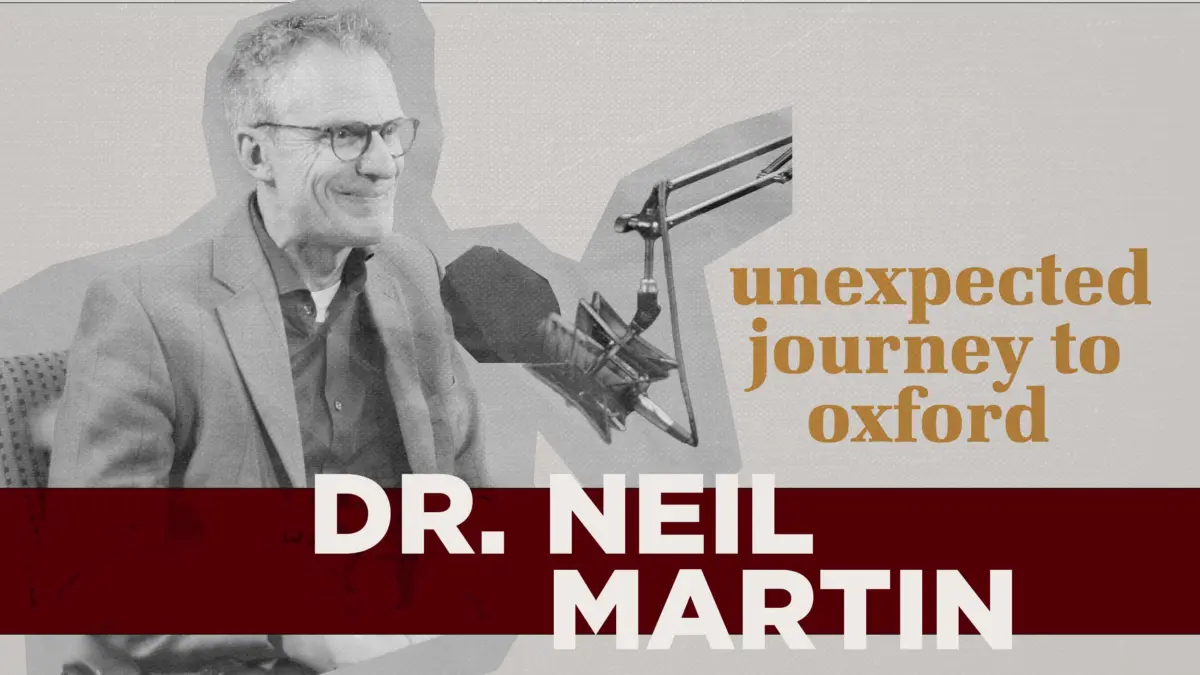
In this episode of the Forum Podcast, Jonah Gollihugh, Communications Team Member and MDiv ’16 alum, speaks with Dr. Neil Martin, ThM ’13 alum, pastor, former design professional, and scholar, about faith, suffering, vocation, and the surprising ways God forms a life for service.
From a non-Christian upbringing in the UK to engineering studies at Cambridge, from a decade of severe illness to Bible translation work, seminary study, and doctoral research at Oxford, Martin’s story is a remarkable testimony to God’s providence.
Coming to Faith in the UK
Martin begins by describing his conversion to Christianity as a teenager in the UK. He did not grow up in a Christian family, but was drawn toward faith through a small village church, where older believers offered kindness, stability, and a compelling witness.
That early experience shaped one of the major themes of the conversation: God as refuge. Again and again, Martin reflects on the ways God met him in difficulty and drew him back to grace and dependence.
How Illness Deepened His Life in Scripture
One of the most moving parts of the interview is Martin’s account of a sudden health crisis early in his career. After beginning work as a designer, he experienced severe illness that left him largely unable to walk or work normally for much of the next ten years.
That season of suffering became a season of theological depth. Martin describes turning to Scripture daily for help, endurance, and strength. He also spent those years reading deeply in theology and slowly growing into the kind of questions that would later shape both his ministry and scholarship.
From Design Work to the 2011 NIV Update
After his health improved, Martin found himself working with Zondervan HarperCollins in Grand Rapids. That work soon opened into a central role in the creative direction of the 2011 NIV update.
In the conversation, Martin explains how his design background shaped the process. Rather than relying only on personal impressions in debates about language, he and his team looked to computational lexicography and language data to better understand contemporary usage.
This part of the interview highlights one of the most striking features of Martin’s story: gifts formed outside traditional ministry can become deeply useful in service to the church.
Calvin Seminary’s Role in His Formation
After the NIV project and growing involvement in ministry, Martin began seminary study at Calvin. He describes Calvin as a place that helped organize and deepen years of theological reading into a stronger framework for ministry and scholarship.
He speaks especially appreciatively about studying New Testament letters and seeing rigorous exegesis held together with concern for preaching and the life of the church.
Oxford, Galatians, and Scholarship for the Church
Martin eventually returned to Oxford for doctoral study, where a question about Galatians became the basis for his PhD research. In the interview, he explains the research as part of a larger calling to serve both the academy and the church.
He also offers thoughtful advice for those considering advanced theological study. A doctorate, he says, must be driven by love for the work itself and by a sense that the project can genuinely serve God’s kingdom.
Life in Oxford Today: Pastor, Charity Founder, and Academic
Today, Martin describes his life as a threefold vocation: pastor, charity founder, and academic. He serves in a growing church plant in central Oxford, helps lead a charity supporting students, and teaches and researches in the university context.
Across all three roles, the same conviction remains clear: Christ belongs at the center of intellectual life, ministry, and human flourishing. Martin’s work reflects a vision of scholarship and service that is deeply rooted in the church and deeply engaged with the world.
A Story of Providence and Calling
By the end of the episode, Martin’s story emerges as a testimony to God’s providence. Illness, design, theology, ministry, and scholarship do not appear as disconnected chapters, but as parts of one life being shaped for service.
For alumni, pastors, students, and anyone discerning their own calling, this conversation offers a powerful reminder: God often works through the unexpected parts of a life, and faithfulness is rarely linear.
